



Discharged from hospital?
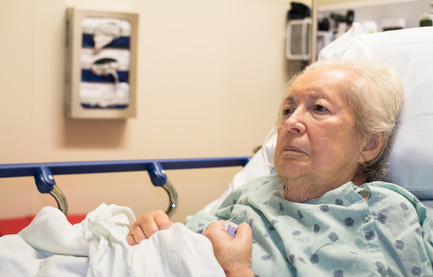
To incentivise quicker hospital discharge, the Government has put in place a COVID discharge funding scheme to help patients going into care.
Did you know that, from 1st September 2020, if you (or your relative) are discharged from hospital into a care or nursing home, and require a new or additional package of care, you are entitled to receive free NHS funding for the first 6 weeks of your care, or until such later date as your long-term care needs have been assessed and the outcome is notified to you?
In the meantime, until the assessment has taken place and you have been informed of the outcome decision, your local Clinical Commissioning Group (or Local Authority) are obliged to continue paying for your care from their own resources and you should not be asked to pay a penny.
For more information, read our blogs:
Are you ready for 1st September 2020? CHC Funding Gets Back to Business
Read this if your relative is about to be discharged into a care or nursing home
Part 1. Explaining The Vital Difference Between Social Needs vs Healthcare Needs
This pot of available funding is not widely known nor volunteered, and unless you happen to chance upon it, there’s a real likelihood that you could be paying for your first 6 weeks in a care home, quite unnecessarily.
We applaud the BBC Radio 4 programme, ‘You and Yours’ dated 4th November 2020 for highlighting this specific issue on their excellent radio programme.
We also wanted to make special mention and thank ‘Caroline’ who called into the programme to share her story and for specifically mentioning Care To Be Different. She had no idea about the Government’s COVID discharge fund until she got in touch with us. We are pleased to hear that she found our services and information helpful.
Here’s our transcript of the interview slot in case you missed it. You can read about Caroline’s issue and the lack of transparency and public awareness of the COVID discharge fund. We have tried our best to portray the interview verbatim. You also can listen to it via this link (for as long as it is available): https://www.bbc.co.uk/sounds/play/m000p1gl
Presenter (Winifred Robinson): “The NHS is needlessly adding to families’ emotional and financial burden by refusing to fully fund the care of people who qualify for that funding. That is the key finding of a report published today by the official body that investigates complaints. If this story sounds familiar to you, it’s because it is. Wrongly denying very sick people discharged from hospital free, NHS Continuing Care has been going on now for years and years. Here at ‘You and Yours, listeners email us about it regularly. Caroline got in touch with us only last Thursday from Sussex, to tell us about her mum.
Caroline: “Well she’s got Dementia. She’s been in a residential home and she had a fall broke her leg and elbow and was taken to hospital. At the hospital, they said that she couldn’t go back to her residential home because she would need the care of two, and so we would have to be looking for a Dementia nursing home, and of course, the nursing care is almost double what a residential home is. To be honest, we’re right at the end of funding. Mum’s house has gone, the savings have gone, and I was panicking a lot to be honest. We found the home, paid them four weeks of respite which is £5,500, and then I thought I’m going to get in touch with Dementia UK and find out about continuing health care and whether she would, you know, qualify for it now. And they put me in contact with a company called Care To Be Different. They said, she’s entitled to what’s something called Covid discharge arrangement, and I said, sorry I don’t know what you’re talking about, and they said, basically it’s a national government directive and whereby, an elderly person, if they are discharged from hospital to a nursing home, they are entitled to up to the first six weeks of fees, and you know the CCG will pay them. And I haven’t been told this at all. None of the Department bodies that I dealt with at the hospital, you know the social services, the hospital discharge or any of them, had said anything about this.”
Presenter: “Rob Behrens is the Parliamentary and Health Service Ombudsman*, an independent arbitrator, he is the author of today’s report. Rob Behrens, our listener, Caroline, has been told by a care company [sic Care To Be Different] that her mum and anyone else discharged from hospital to a nursing home in England in the pandemic, is entitled to six weeks of NHS Continuing Care. Is that your understanding?”
RB: “Well, first of all I want to say how sorry I am to hear about the distress Caroline and her mother have been through – that’s not untypical. We’re talking about fundamental rights here, and the absence of them in this case. Yes, the government has put in place special arrangements during the pandemic, which at the moment means that, anyone discharged from hospital into a nursing home will have the first six weeks of their care paid for – to allow ongoing care arrangements and a full continuing health care assessment to take place. Now, one of the issues here is finding out what you can have access to, and I suggest that anyone listening goes onto a number of websites which spell it out very clearly… Beacon is one, Voiceability, Age UK, Parkinson’s UK – spell it out. Now, I’m not defending the absence of Caroline being told this by the authorities, but you know, you have to do what you can in a crisis situation.”
Presenter: “Rob, well we spent ages this morning, our team, looking at government guidelines, pages and pages and pages of them, and I couldn’t find it clearly spelt out in any of those guidelines. I mean these rules are complex, and it feels as if officialdom, from top to toe, make them as a opaque as they can.”
RB: “Well, there is a big issue here. I mean continuing healthcare has been a challenge for a long time, as I think you know, and it is very complicated in order to meet needs, and it’s a complicated process. It involves a number of agencies, supposedly working together; it requires professionalism on the frontline, and if people are not communicated to during a time of personal crisis and told what their rights are, they’re not going to easily find out. So, I think you’re absolutely right, and the NHS needs to sit up and take notice of what you’ve just said and what is clear in in my full report.”
Presenter: “I can remember this story on ‘You and Yours’ when I first joined the team, and that was 20 years ago, and I can remember MPs calling NHS Continuing Care, and I’m quoting now, “The best kept secret in the NHS.” What do you recommend should happen now?”
RB: “Well, I think first of all, I should pay tribute to what You and Yours have done to run with this issue and that’s unusual and very important. Secondly, we have laid this report, which I commend to your listeners to read, before Parliament and its Select Committees, to make sure that the NHS gives an account of what it’s doing and what changes it’s going to make as far as the recommendations, and the failures that that we’ve talked about. But, remember that the Ombudsman has no binding power to force a change under our current law, so we are dependent upon Parliament raising the issue in a way that forces the NHS to act.”
Presenter: “Do you think it’s really just a case of the NHS and the government rationing what funds there are?”
RB: “I think there are a lot of problems. On the basis of a very comprehensive study that we’ve done – we looked at over 300 decisions which we’ve made in the last two years – that’s a lot of cases – where we did 150 full investigations. I’m not able to say… I say a lot of things about failures, but I’m not able to say that it’s a result of financial rationing which has led to these issues. There are many other issues as well. Though, I accept, as I’m sure you’re aware, that the health service is going through unprecedented challenges at the moment and that doesn’t make it any easier.”
Presenter: “We asked NHS England if they’d like to come on the program but they said they couldn’t do that today, but they did say they look at the recommendations that you have set out, together with local health groups and the government who currently set the guidance on eligibility, and they also say, those who are concerned, can request an independent appeal review. How easy is that?”
RB: “Well, I mean it goes back to your point that these issues are not easily articulated. It’s difficult to find out about them. It’s quite hard to get from where the assessment is made to the Ombudsman’s office and increasingly smaller numbers of people go through the process. So, one of the key things, and I think there are two issues here – one of the key things is that the NHS needs to do a lot more to make this system understandable to users and to advocates who help the users. And secondly, Parliament has to call to account those who have responsibility for this through the Select Committee system to ensure that they give an account for what they’re doing. We have asked for the government to give a response within six months of what it’s doing in response to my report, and that is sensitively taking account of the current crisis. So, you know, there’s plenty of time for them to act on this and it’s up to Parliament to make sure that they do.”
Presenter: “I’m sure we will have you back, but people can complain to you, can’t they, when they feel they have been wrongly denied NHS Continuing Care? What proportion of cases do you uphold?”
RB: “Well, we get around between 500 and 800 complaints about this issue every year. We have a special team dealing with continuing healthcare because it’s complicated and it needs expert advice. Not everything that we receive is eligible, because you have to go through the frontline body first before you can make a complaint to us. But, we’re upholding around a third of the full investigations that we hold and there are significant failures which we’ve discovered, including two people losing £250,000 each as a result of the failures of the system.”
*Parliamentary and Health Service Ombudsman – “The Ombudsman’s role is to investigate complaints that individuals have been treated unfairly or have received poor service from government departments and other public organisations and the NHS in England.” Visit: https://www.ombudsman.org.uk/making-complaint
Summary:
Thanks to the BBC ‘You and Yours’ and to Caroline for featuring this issue and bringing it to the public’s attention.
If you want to make a complaint, you must first exhaust the CCG’s own complaint procedure. For more information, see: https://www.ombudsman.org.uk/about-us/who-we-are/the-ombudsman.
For more information, take a look at these blogs:
Rationing NHS Continuing Healthcare Funding – The ‘NHS’s Best Kept Secret’
Essential Preparation and Planning As CCGs Restart Assessments and Appeals From 01/09/2020
You, too, can spread the word and tell others about their entitlement to first 6 weeks’ free care upon discharge from hospital to a care facility. Let us know if, like Caroline, you were unaware of this available funding, and what you did about it when you did find out. Did you get reimbursed, and how long did it take?
Leave a comment below if you want to contribute to the debate…

Leave a reply & join the discussion