

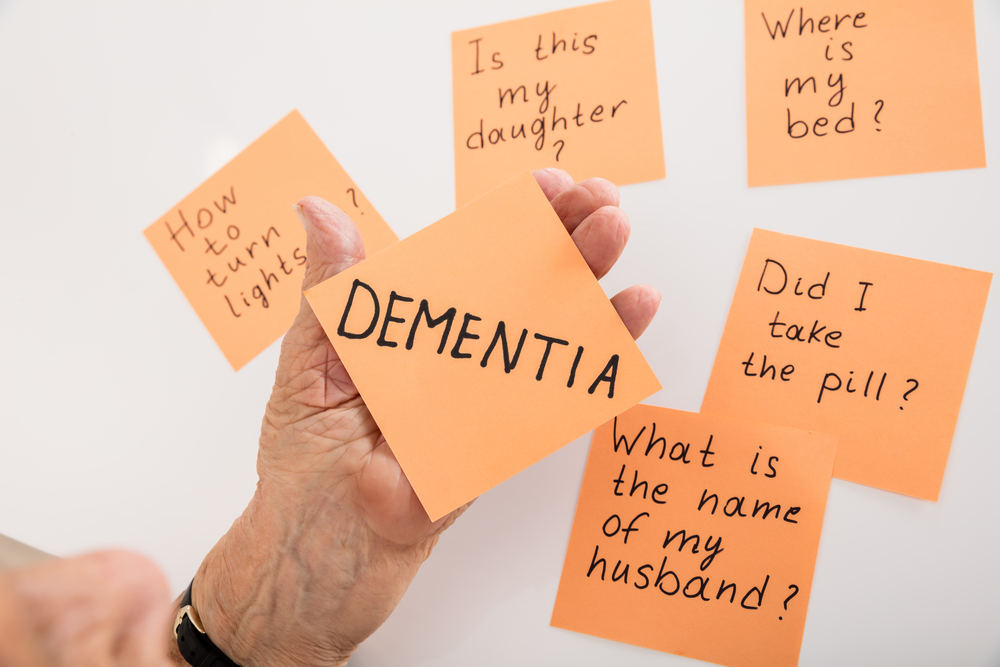

This series takes a detailed look at the domains of the Decision Support Tool. This week we examine the first three descriptors in the Cognition domain, to help you assess your or your relative’s “level of need” in this important domain.
Don’t miss parts one to twelve of this series!
Get Help Breaking Down The Decision Support Tool: An Overview
Get Help Breaking Down the Decision Support Tool: Breathing Part 1
Get Help Breaking Down the Decision Support Tool: Breathing Part 2
Get Help Breaking Down the Decision Support Tool: Nutrition Part 1
Get Help Breaking Down the Decision Support Tool: Nutrition Part 2
Get Help Breaking Down the Decision Support Tool: Continence
Get Help Breaking Down the Decision Support Tool: Skin (including tissue viability), Part 1
Get Help Breaking Down the Decision Support Tool: Skin (including tissue viability), Part 2
Get Help Breaking Down the Decision Support Tool: Mobility, Part 1
Get Help Breaking Down the Decision Support Tool: Mobility, Part 2
Get Help Breaking Down the Decision Support Tool: Communication
Get Help Breaking Down the Decision Support Tool: Psychological & Emotional Needs
Following the 2018 revisions of the DST, Cognition moved from domain number two to domain number eight. It now follows Psychological & Emotional Needs and precedes Behaviour, highlighting the common interaction between these three domains. The assessed levels of need in the Cognition domain range from ‘No Needs’ to ‘Severe’ needs. There is no descriptor for ‘Priority’ needs in this domain, indicating that needs arising from cognitive impairment are unlikely to present an immediate risk to life, or amount to a primary health need in and of themselves. Needs in the Cognition domain are important because of their significant impact on every other domain of the DST. This interrelation should always be carefully considered in the analysis of the four Key Characteristics.
The following clinical factors are relevant to the assessment of needs in this domain:
- Does the person have a diagnosis of dementia, learning disability, acquired brain injury or other condition affecting their cognitive function?
- Are they orientated to time (do they know what day/time is is)?
- Are they orientated to place (do they know where they are)?
- Are they orientated to person (do they know who the people around them are)?
- Do they have insight into their condition (do they know their cognition is impaired)?
- Do they have insight into their limitations (do they understand they cannot do certain things without assistance)?
- Do they show risk awareness (e.g., will they test hot drinks before drinking, will they attempt to walk unaided, will they attempt to leave the care home)?
- Do they have awareness of their Activities of Daily Living (e.g., personal hygiene, toileting, eating and drinking)?
- Is their short-term memory affected?
- Is their long-term memory affected?
- What is their score on the Mini Mental State Examination (MMSE)?
- Are they prescribed any cognitive enhancing medications (e.g., Memantine)?
The DST provides the following advice to those assessing needs in the Cognition domain:
This may apply to, but is not limited to, individuals with learning disability and/or acquired and degenerative disorders. Where cognitive impairment is identified in the assessment of need, active consideration should be given to referral to an appropriate specialist if one is not already involved. A key consideration in determining the level of need under this domain is making a professional judgment about the degree of risk to the individual.
Please refer to the National Framework guidance about the need to apply the principles of the Mental Capacity Act in every case where there is a question about an individual’s capacity. The principles of the Act should also be applied to all considerations of the individual’s ability to make decisions and choices.
*REMEMBER – Cognition concerns the functioning of the mind and the awareness of self in relation to the environment. Capacity refers to an individual’s ability to understand their limitations and the risks arising from them. Capacity is not constant and may fluctuate. The Mental Health Act cautions that capacity should always be presumed and that unwise choices do not equate to a lack of capacity. Where there are questions about an individual’s capacity to make decisions about their care, assessment should be made before each intervention to ensure care is delivered in the least restrictive way possible.
Now that we’ve outlined the type of things the Multi-Disciplinary Team (MDT) will be considering in this domain, let’s take a look at the descriptors for the first two levels of need. For each level of need, we provide a case study to give you a better understanding of how the descriptors might be applied at your or your relative’s assessment.
NO NEEDS
| No evidence of impairment, confusion or disorientation. |
| Key Factors
No evidence of cognitive impairment Has capacity to make complex decisions (i.e., to decide where they live) Orientated to time, place and person (i.e., knows what time/day it is, where they are and who the people around them are) Understands their needs and limitations |
CASE STUDY – NO NEEDS
Mrs. X does not have a diagnosis of dementia or associated cognitive impairment. She has been assessed as having capacity to make decisions regarding her residence and care.
Mrs. X is oriented to time, place and person. She understands she is living in a care home because she requires assistance with personal care and mobilising safely.
Mrs. X presents with ‘NO NEEDS’ as she has no evidence of impairment, confusion or disorientation.
LOW
| Cognitive impairment which requires some supervision, prompting or assistance with more complex activities of daily living, such as finance and medication, but awareness of basic risks that affect their safety is evident.
OR Occasional difficulty with memory and decisions/choices requiring support, prompting or assistance. However, the individual has insight into their impairment. |
| Key Factors
Some evidence of cognitive impairment Requires assistance with complex decisions, e.g., finances Orientated to time, place and person Some evidence of short-term memory issues Understands risks and limitations Has insight into their need for assistance |
CASE STUDY – LOW
Mr. X’s family reported that his cognitive presentation has deteriorated since hospital admission and his current physical health condition impacts on his decision making and orientation. Mr. X is reportedly orientated to place but will sometimes ask where he is. He appears to be orientated to person and place but would not know what day it was or the time; however, that is possibly due to lack of stimulation and access to calendar/clock etc.
Mr. X’s daughter states there has been a significant decline since hospital admission. Often, he appears very distracted, cannot hold a conversation and disengages. His ability to retain recent information is poor and he is not as responsive as he used to be, which may be due to pain, current lack of stimulus and low mood. Mr. X is reported to have good long-term memory and he can recall past events. He can make basic informed decisions, express pain and request analgesia. He understands his physical limitations and does not attempt to get out of bed unaided.
Mr. X’s daughter has Lasting Power of Attorney. Mr. X has represented himself in care meetings and complex decisions until recently. Mr. X’s daughter is acting on his behalf during the NHS Continuing Healthcare assessment process. Mr. X is assessed to have capacity to consent to health and welfare matters at present but needs support from family and carers due to his physical impairments and mental health presentation.
Mr. X is unable to maintain a safe environment due to his physical impairments and needs 24hr care to meet all his activities of daily living. He can use the call bell and would express if he were unhappy.
Mr. X presents with a ‘LOW’ level of need as he has cognitive impairment which requires some supervision, prompting or assistance with more complex activities of daily living, such as finance and medication, but awareness of basic risks that affect his safety is evident. He has occasional difficulty with memory and decisions/choices requiring support, prompting or assistance. However, he has insight into his impairment.
For further reading around the subject look at this selection of blogs from our Care To Be Different website:
My Dad Has Dementia – So Will He Automatically Qualify For CHC Funding?
Essential: Have You Got A Power Of Attorney
Tackling consent: Keeping control if your relative lacks mental capacity.
Denied access because you don’t have the necessary legal authority to act for your relative?
We hope this has helped you to understand the first two descriptors in the Cognition domain. Don’t miss the next part of this series, Cognition Part 2, coming very soon!
If you need help assessing your relative’s level of need in any domain on the DST, don’t hesitate to contact one of our specialist Advice Lines to discuss your case today. If you need expert help or advocacy support with your MDT assessment or appeal, visit our 1-2-1 support page.
Don’t forget to take a look at our informative guide book How to Get the NHS to Pay for Care which is available as an email PDF or in paperback.
If there is a particular topic you would like us to cover, we’d love to hear from you! Just send an email via our “Contact Us” page with the subject “blog request” and we’ll do our best to cover your suggested topic.


Leave a reply & join the discussion